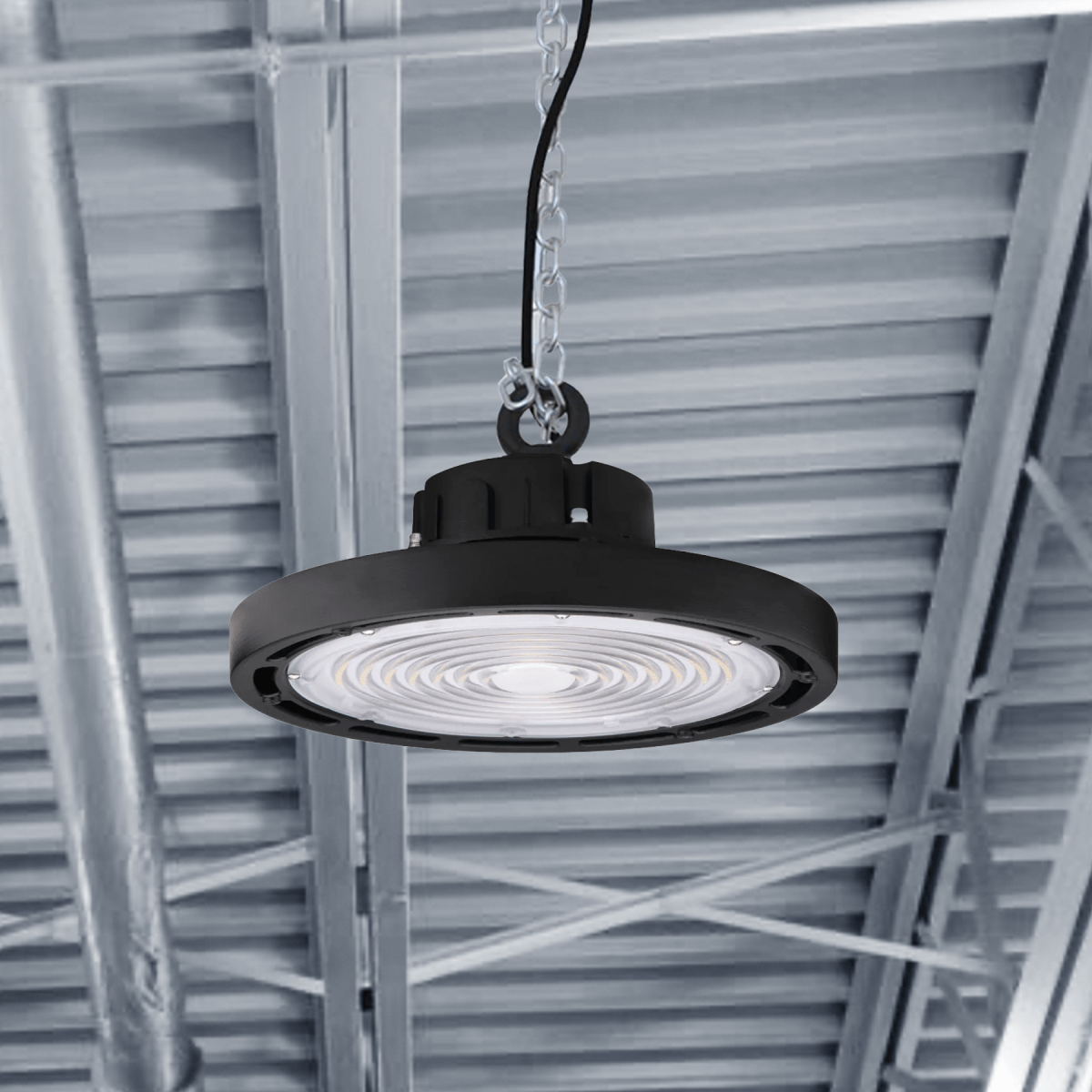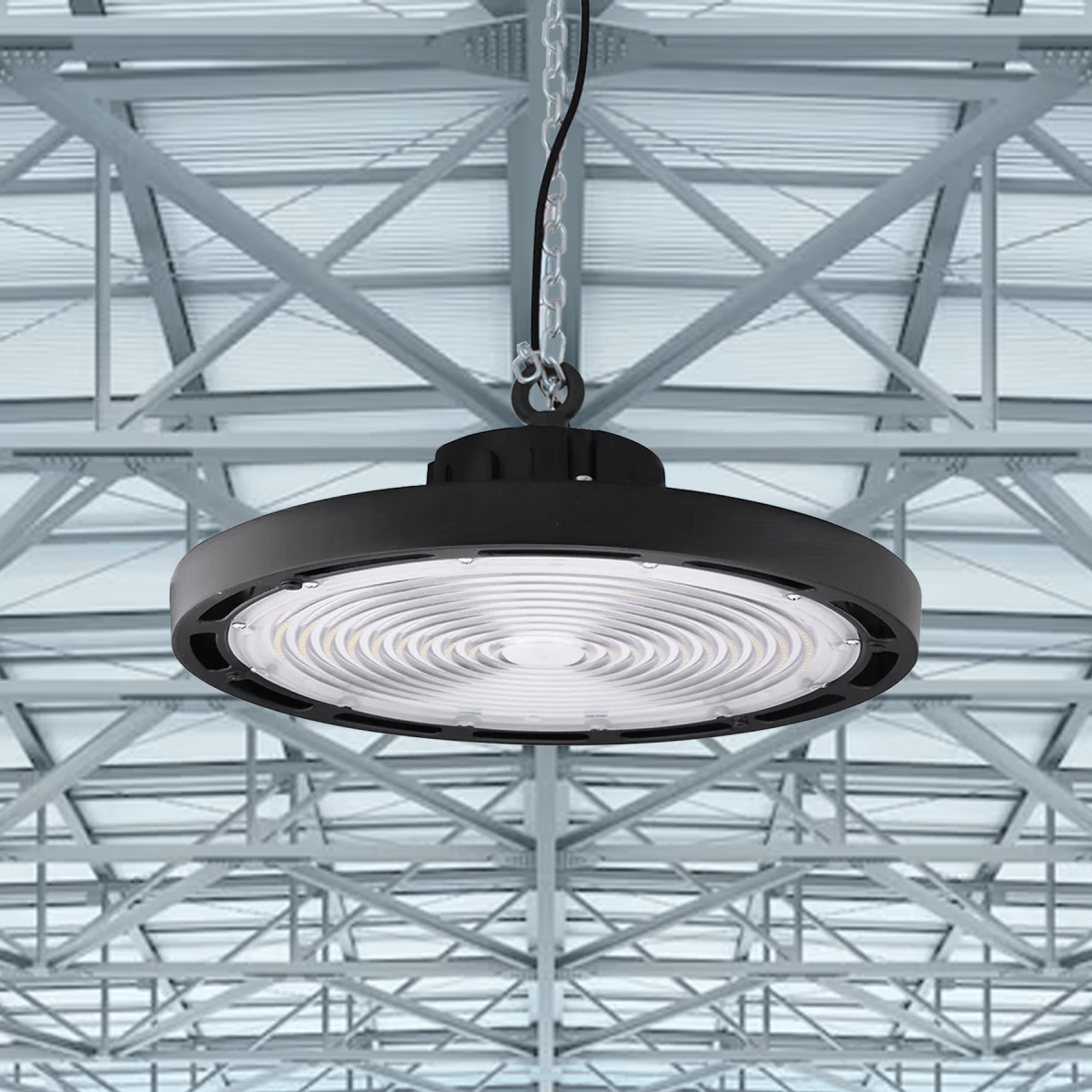


A warehouse may appear bright enough at the entrance while having dark zones in between racks. This takes place in warehouses, factories, and workshops. Light should illuminate the surface area and the working zones without causing discomfort.
This is when High Bay LED Lights become very useful as they are specially designed to be used in high ceiling and large indoor applications. However, it would be unwise to purchase the first available bright fixture without considering your needs.
Why Businesses Move Away From Older High Bay Lights
 Old warehouses usually have metal halide, fluorescent, or other HIDs installed. These systems might be functional but not necessarily economical to maintain.
Older fixtures can use more electricity for the light they provide. Some also take time to warm up. Maintenance gets costly when a failed lamp sits 25 or 30 feet above the floor.
Commercial High Bay Lighting based on LED technology can reduce many of these problems. The real value often shows up when you look at the full running cost, not just the price paid on day one.
Start With the Ceiling Height
 A fixed source installed in a 15 foot workshop is different from one suspended from a 35 foot warehouse ceiling. Since the distance that the light travels increases, beam spread takes on greater significance at different mounting heights.
Before shopping, write down:
-
Ceiling height
-
Room length and width
-
Rack or shelf positions
-
Main work areas
-
Existing fixture locations
-
Available voltage
These measurements give you a better starting point than wattage alone.
Lumens Matter More Than a Big Watt Number
 Many buyers still compare fixtures by watts because that was common with older lighting. With LED products, lumens tell you more about how much light the fixture puts out.
Too much output in a low space can create glare. Too little output in a tall building can leave the floor dull. Good Warehouse LED Lighting should give enough light where people work without wasting power on output the room does not need.
It is also worth checking lumens per watt. This makes it easier to compare the efficiency of different fixtures.
UFO or Linear: Which Shape Makes Sense?
 High bay lights typically have longer linear shapes or spherical UFO styles.
Workshops, garages, warehouses, gyms, and manufacturing spaces are examples of open locations where a UFO LED High Bay performs well. Its compact body also fits many layouts.
Linear fixtures often make more sense over long aisles, production areas, packing lines, or rows of shelving. Their shape follows the room better in those cases.
Do not choose by appearance alone. Think about what is below the fixture and where the light needs to land.
LEDMyPlace Buyer’s Guide: Check These Details Before Ordering
 A few minutes of checking specs can prevent a wrong order.
First, match light output to mounting height. Then look at beam angle. More light will be delivered downwards through a narrow beam than through a wide one, although a wider beam delivers light to a large surface area.
Next, check color temperature. Neutral or cooler white light can make labels, tools, aisles, and surfaces easier to see. Keep one color temperature across the same work zone.
Also review:
-
Dimming compatibility
-
Motion or occupancy sensor options
-
Input voltage
-
Mounting hardware
-
Damp or wet location rating
-
Product certifications
-
Warranty coverage
LEDMyPlace carries Industrial LED High Bay Lights in different wattages, outputs, color temperatures, and control options. Compare the exact model details with your building before ordering instead of assuming one fixture fits every project.
Controls Can Save Light Where You Do Not Need It
 Not every corner of a building is busy all day.
Storage aisles may sit empty for long periods. A back section of a warehouse might only be used a few times per shift. In spaces like these, sensors or dimming controls can help.
LED High Bay Fixtures with controls can lower output when full brightness is not needed. This helps manage energy use without leaving active work areas dark.
For buildings with extensive working hours, that flexibility can matter.
Problems That Cost Buyers Time and Money
 Most high bay problems start with a poor match between the fixture and the building.
Common mistakes include:
-
Buying only by wattage
-
Ignoring ceiling height
-
Using too many fixtures
-
Forgetting beam angle
-
Mixing color temperatures at random
-
Ordering the wrong voltage
-
Missing dimmer or sensor requirements
-
Assuming mounting parts are included
Another mistake is replacing old fixtures one-for-one without checking whether the new LED layout should be different. LED output and distribution can change the number of fixtures or spacing needed.
So, Are High Bay LED Lights Worth It?
For many commercial and industrial spaces, they can be.
This is normally applicable in cases where a building has tall ceilings, long working hours, hard-to-maintain access, or old high-wattage lighting systems. The benefits are not only economic. Fewer lamp changes and better control options can also affect long-term cost.
The crucial point here is the choice of an appropriate fixture, not LED itself.
Measure the room first. Check the ceiling. Compare lumens, beam angle, voltage, controls, and mounting needs. Then look at price.
Whether you’re replacing old lighting fixtures or building a new facility, LEDMyPlace offers high bays for warehouses, workshops, factories, garages, and similar spaces. Get what you need, not the largest number on the product listing.
Frequently Asked Questions
Q. What Problems Can Occur With High Bay Lights?
A: Common issues include glare, dark spots, poor fixture spacing, wrong beam angles, and choosing the wrong lumen output for the ceiling height. Correct planning usually prevents most of these problems.
Q. Are LED High Bay Lights Worth Buying?
A: Yes, especially for warehouses, factories, gyms, and other large spaces. They can use less energy, need less maintenance, and provide steady light over long operating hours.
Q. Which Brand Makes the Best High Bay LED Lights?
A: The best brand depends on the required wattage, lumens, voltage, certifications, warranty, and controls. LEDMyPlace offers several high bay options for different commercial and industrial applications.
Q. How Long Do LED High Bay Lights Usually Last?
A: Many LED high bay fixtures are rated for around 50,000 hours or more. Actual lifespan depends on operating conditions, heat management, usage hours, and overall fixture quality.
Q. Do LED High Bay Lights Produce a Lot of Heat?
A: They do produce some heat, but usually much less radiant heat than older HID or metal halide fixtures. Good heat-sink design helps move heat away from the LEDs and supports longer fixture life.