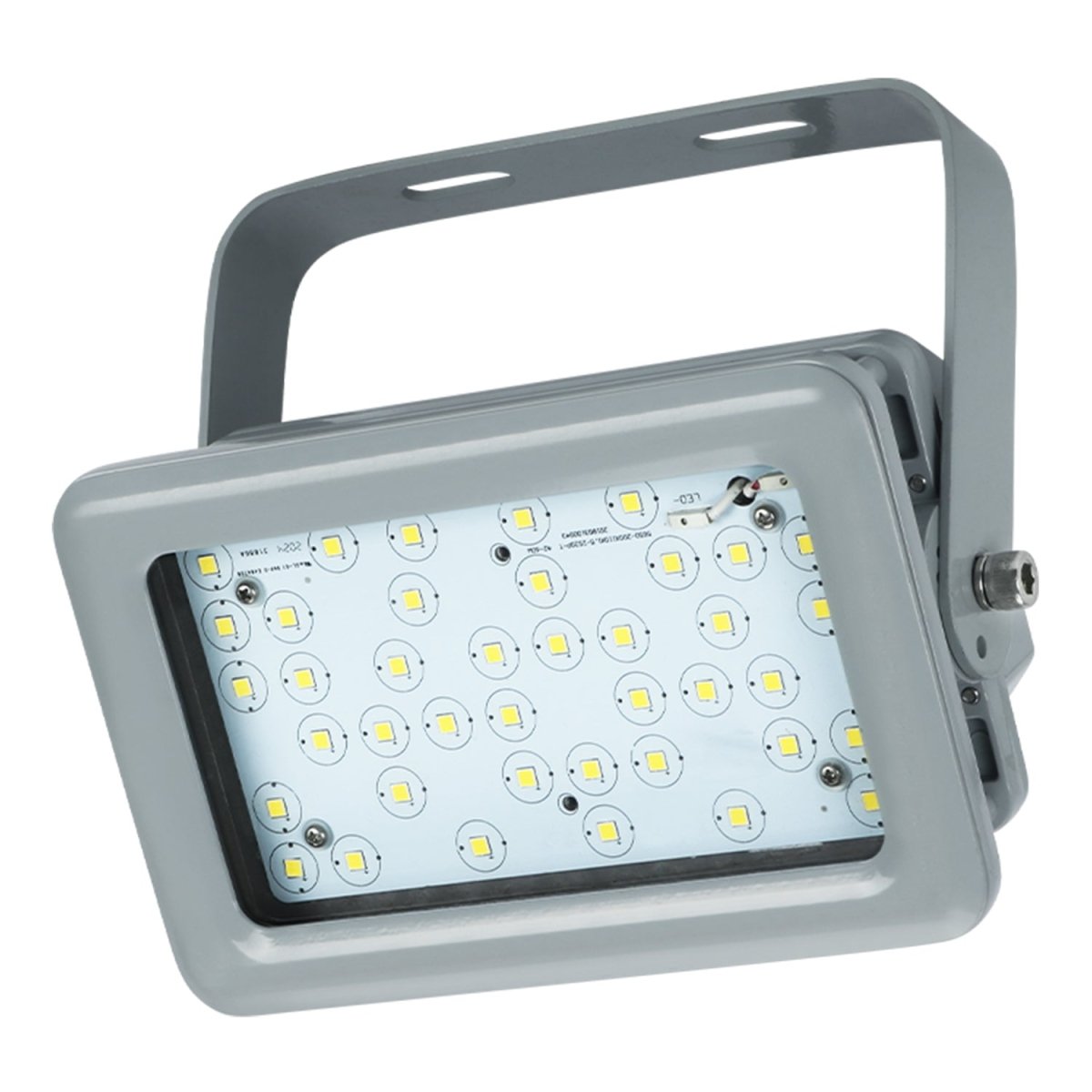


Lighting for a hazardous area is not like lighting an office or warehouse. There may be flammable gases, vapors, dust, or fibers that will affect the type of lighting equipment used.
That is why Explosion-Proof LED Lights are used in certain industrial settings. These fixtures are made for classified locations where ordinary lighting may not be suitable, including fuel handling areas, chemical plants, paint facilities, and grain processing sites.
Buying one is not as simple as choosing a wattage. All of these factors must be considered prior to purchase.
Safety Fact 1: A Rugged Light is Not an Explosion-Proof Light
 The majority of lights used in industries have durable housings and are metallic to be able to withstand harsh conditions such as being dirty, wet, vibrated, and impacted. This, however, does not mean that they can be installed in the classified area.
Hazardous Locations are classified according to the material which may be present and its likelihood to create the hazardous atmosphere. Gas/vapor hazard areas differ greatly from combustible dust or flammable fiber locations.
That means a fixture that works in one industrial room may not be right for another.
Before ordering, check the product label and specifications for the required Class, Division, Zone, group, and temperature information. Also review the voltage, listing, and environmental rating.
Safety Fact 2: “Explosion-Proof” Does Not Mean Indestructible
 The name causes confusion. Explosion proof apparatus is manufactured to minimize chances of ignition in a hazardous environment. It does not imply that the apparatus will withstand any kind of explosion or be safe in any kind of hazardous area.
This matters when planning Industrial Safety Lighting.
OSHA requires equipment in hazardous classified locations to be approved or otherwise suitable for the specific location and the material present. The fixture may also carry markings for class, group, and operating temperature.
Temperature deserves attention. Electrical equipment produces heat, and the fixture surface must stay within the limits required for the hazard around it.
So, do not stop at the words “explosion-proof.” Read the rating.
If there is a mismatch between fixture ratings and sites, then the fixtures would be inappropriate for that site.
Safety Fact 3: Identify the Area Before Choosing the Light
 Start with the work area, not the fixture.
This sounds basic, but it can prevent an expensive mistake. Class I locations involve flammable gases or vapors. Class II locations involve combustible dust. Class III locations involve easily ignitable fibers or flyings. Divisions or Zones give more detail about how often the hazardous condition may exist.
A paint finishing area, fuel transfer point, grain handling room, and general warehouse aisle can sit inside the same facility and still need different electrical equipment.
That is why Hazardous Area LED Lights should be selected after the area classification is known.
In case the classification is missing, outdated, or vague, do not assume anything based on the kind of building. Have it assessed by an expert.
Safety Fact 4: The Everyday Environment Matters Too
 Hazard classification is only one part of the job.
A fixture may also face heat, moisture, washdown, chemicals, dust, vibration, or long operating hours. Those conditions can affect the housing, seals, wiring, lens, and service life.
Check the ambient temperature range. Look for the correct wet or damp location rating when needed. Consider ingress protection, corrosion resistance, housing material, mounting possibilities, and input voltage.
The Explosion-Proof LED Lights have to meet the classification of the hazard and the working environment.
Think about maintenance as well. A fixture installed high above equipment or in a hard-to-reach process area may be difficult to replace. Choosing the right product from the start can reduce avoidable service work later.
Safety Fact 5: Safe Lighting Still Has to Light the Job
 A correct rating does not help much if workers cannot see what they are doing.
Industries may use gauges, labeling, piping, equipment, paths, loading docks, and inspection stations. Shadow areas and excessive glare will complicate routine activities.
Determine the luminous flux, beam spread, mounting height, spacing of lights, and color temperature. High luminous flux can be inefficient if there is inadequate beam spread.
For large spaces, a photometric layout can be useful. It can show how light may spread across the floor or work surface before fixtures are installed.
Good Industrial Safety Lighting should support the electrical safety plan and give workers practical visibility.
LEDMYPLACE Buyer’s Guide: What Should You Check Before Buying?
 If you are shopping on LEDMYPLACE, begin with the information from the site, not the product thumbnail.
First, confirm the hazardous area classification. Then identify the gas, vapor, dust, or fiber involved. Check the required group and temperature rating. Then, compare the fixture voltage, classification, lumens produced, beam angle, mounting method, operating temperatures, and environmental protection.
In addition, consider the fixture mounting location and operational frequency. Height of ceiling, ease of maintenance, moisture, chemicals, vibrations, and operating hours may all influence the purchase decision.
Don’t replace the classified fixture with the standard LED because the wattage values are similar.
If any value is not clear, please consult with the electrician, engineer, safety officer, or another competent individual involved in the site operation prior to ordering the product.
Conclusion
Exploding Proof LED Lights do not apply universally to all industrial buildings; they are designed to suit different hazards, classes, and work environments.
Start with the location. Confirm the hazard. Read the fixture markings. Check temperature, voltage, and environmental limits. Then look at brightness, beam spread, mounting, and maintenance needs.
LEDMYPLACE gives industrial buyers access to lighting options built for demanding applications, including Hazardous Locations where properly rated equipment may be required.
The right selection should suit the site both theoretically and practically. In case the classification, fixture rating, and requirements for light are all in harmony, the outcome is safe planning, no surprises during installation, and proper lighting for the task at hand.
Frequently Asked Questions
Q. What makes an LED light explosion-proof?
A: An explosion-proof fixture uses a sealed, rated design made for specific hazardous conditions. Always check its Class, Division, Zone, and temperature rating before use.
2. Where are explosion-proof LED lights commonly used?
A: They are often used in chemical plants, fuel areas, paint facilities, grain processing sites, and other classified industrial locations.
3. Can I use regular LED lights in hazardous locations?
A: Not unless the fixture is approved for that specific location. Standard LEDs may not meet the electrical safety requirements of a classified area.
4. How do I choose the right hazardous area LED light?
A: Start with the site classification, hazard type, temperature rating, and voltage. Then compare lumens, beam angle, mounting, and environmental protection.
5. Are explosion-proof LED lights worth buying for industrial sites?
A: Yes, when the location requires properly rated equipment. LEDs can also provide strong visibility, long service life, and lower maintenance needs.