

Work environments that can’t have the same kind of lighting seen in a warehouse, garage, or office are the ones like the following: refineries, chemical plants, grain facilities, paint departments, or fuel handling facilities.
That is where LED Explosion Proof Lighting comes in. These fixtures are made for industrial spaces where lighting must do more than provide brightness.
A heavy housing alone does not make a fixture right for every hazardous location. The rating, environment, mounting point, light output, and operating conditions all need to line up.
What Does “Explosion Proof” Really Mean?
 Explosion proof does not mean a light is impossible to damage. It refers to a fixture design made for locations where ignition risks may exist.
In simple terms, the fixture is built so sparks, heat, or electrical activity inside the housing are better controlled for its intended application. That is why Explosion Proof Lighting Fixtures are used where ordinary industrial lights may not be suitable.
Buyers should follow the product’s listed ratings and the safety requirements for the facility.
Where Are These Lights Commonly Used?
 Hazardous Area LED Lights are used in industrial spaces such as:
-
Oil and gas facilities
-
Chemical processing areas
-
Paint and spray locations
-
Fuel storage or handling areas
-
Grain and milling operations
-
Heavy manufacturing plants
-
Damp or dusty industrial areas
LEDMyPlace also lists explosion-proof lighting for uses such as oil and gas, chemical, ocean, aerospace, alcohol factories, and intensive factory sites on current product pages.
The environment comes first. Buyers should not select a fixture only because the space is “industrial.”
Why Hazardous Environments Need Different Lighting
 Industrial lighting fixtures face heat, dust, moisture, vibration, airborne particles, and tough daily use. In hazardous environments, there is another concern: an ignition source may become dangerous around flammable or combustible material.
Flammable gases be a concern in some processing or fuel-related areas. Combustible dust create risk in certain grain, food, wood, or manufacturing operations.
The fixture needs to match the job.
This type of lighting is designed to meet such tough conditions, yet it is necessary that the purchaser ensure the exact specification.
What Should You Check Before Buying?
 It is easy to focus on wattage first. That is usually the wrong starting point.
Begin with the installation area. Ask what conditions the fixture will face and what rating the project requires. Then compare lighting performance.
Useful details to review include:
-
Hazardous-location suitability
-
Product approvals and ratings
-
IP rating
-
Input voltage
-
Wattage
-
Lumen output
-
Color temperature
-
Beam angle
-
Mounting style
-
Dimming needs
-
Operating conditions
-
Warranty
LEDMyPlace’s current collection includes UL Listed filtering, while several product pages show IP66 construction.
LEDMyPlace Buyer’s Guide: Match the Fixture to the Job
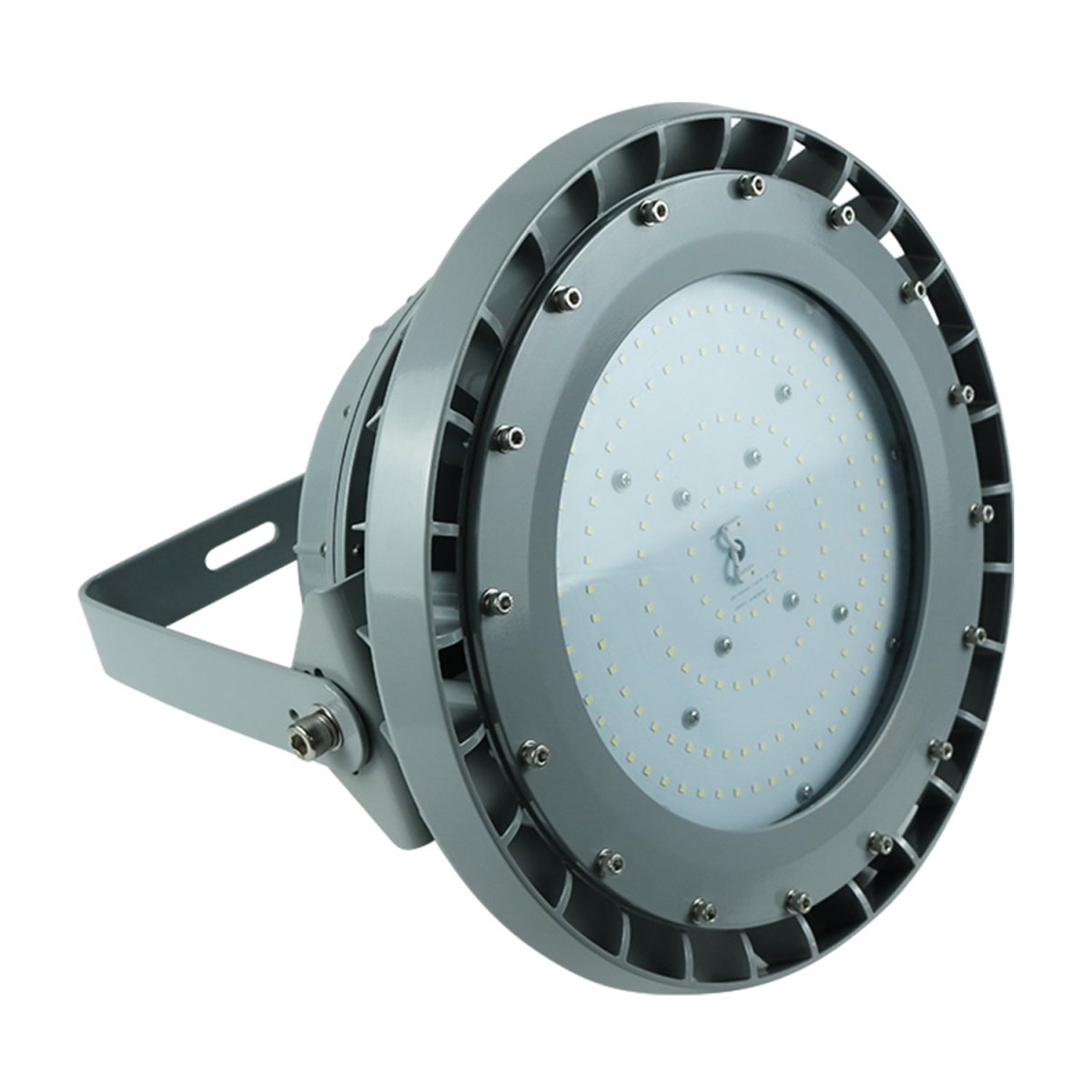
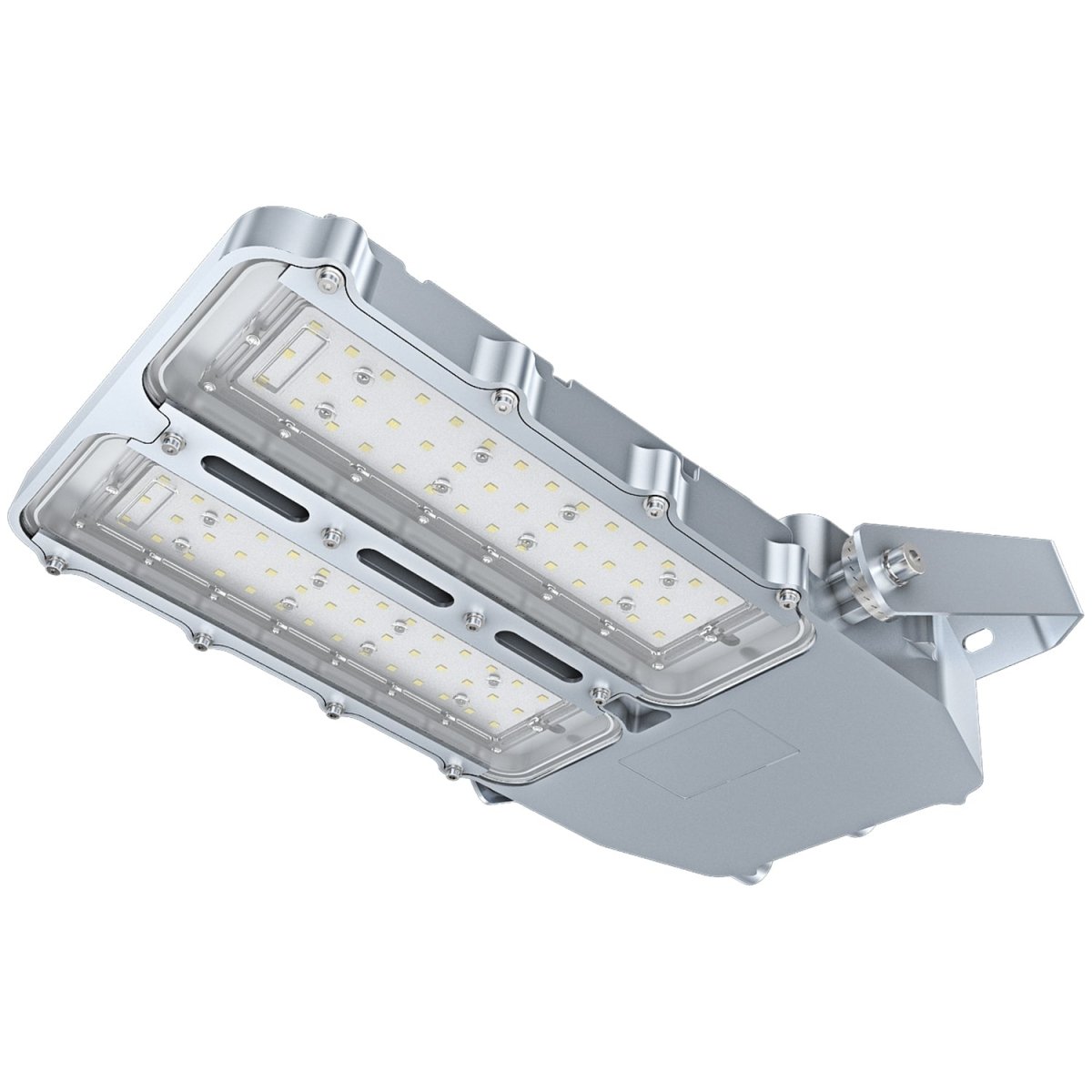
 For a large open industrial floor, a round high bay may make sense. A long work area may call for a linear fixture. Some outdoor or wide-area applications may be better suited to a flood or area light. Vapor-proof styles may fit other locations.
LEDMyPlace currently carries several formats within its LED Explosion Proof Lighting range, including high bays, flood lights, linear lights, low bays, vapor-proof lights, jelly jar lights, and street-light styles.
Look at lumens, not wattage alone. Check the beam angle so light reaches the work area properly. Confirm voltage before ordering. If dimming is important, make sure the selected model supports it.
For larger projects, it helps to compare more than one fixture style before buying. A high bay may work above an open floor, while a linear model can suit longer work zones. Flood or area lights may fit coverage needs. Checking lumen output, beam spread, mounting position, and voltage together can prevent a poor match and reduce the chance of buying more light than the space needs.
Finally, review the exact ratings on the individual product page. Do not assume every fixture in the category has identical specifications.
Does IP66 Mean a Light Is Explosion Proof?
 The IP code provides data on the degree of protection against solid and liquid objects. IP66 is effective for dusty and/or wet conditions, but IP66 alone does not mean that the fixture is fit for all explosive environments.
This is the reason why waterproof, vapour-proof, fire-proof lighting and explosion-proof lighting must not be considered the same.
A fixture may have good environmental protection and require hazardous location certification separately for certain applications.
Always look at the whole listing rather than shopping by one badge or rating.
Common Buying Mistakes in High-Risk Industrial Areas
 One is buying by price before checking ratings. Yet another one is selecting the highest wattage since it looks more secure or brighter. A higher wattage doesn’t always indicate that it will produce more illumination.
The customer may overlook beam coverage, mounting height, voltage, or environmental exposure.
Another mistake is assuming one fixture works everywhere. Hazardous locations differ greatly, even within the same facility.
The better approach is to match the fixture to the specific area and confirm installation requirements before placing a bulk order.
Why LEDs Make Sense for Industrial Safety Lighting
LEDs offer a practical advantage in facilities where maintenance can be difficult. Long operating life reduce how often workers need to access high, awkward, or restricted areas.
They provide strong light output with lower wattage than many older lighting systems.
Still, efficiency should come after safety and suitability. The right fixture is the one that fits the location first.
Conclusion
Choosing Hazardous Area LED Lights is not just a brightness decision. The space, environment, ratings, voltage, beam spread, mounting style, and fixture type all matter.
LEDMyPlace offers a broad range of LED Explosion Proof Lighting options for industrial applications, including round high bays, linear fixtures, flood lights, and other formats.
Before ordering, review the individual product specifications carefully. Match the fixture to the actual working conditions rather than relying on a general label.
Good lighting would help workers see properly in high-risk industrial zones. More importantly, it needs to be chosen based on the surrounding environment.
Frequently Asked Questions
Q. What are LED explosion-proof lights used for?
A: They are used in hazardous industrial areas where flammable gases, vapors, or combustible dust may be present. They are common in refineries, chemical plants, fuel areas, and processing facilities.
Q. Are explosion-proof LED lights the same as waterproof lights?
A: No. A waterproof rating shows protection from water and dust, while explosion-proof lighting is designed for specific hazardous-location risks. Always check the product’s full safety rating.
Q. How do I choose the right hazardous area LED light?
A: Start with the site conditions, required ratings, voltage, mounting height, lumen output, and beam angle. The fixture should match the actual environment before you compare brightness or wattage.
Q. Can explosion-proof lights be used around combustible dust?
A: Yes, but only when the fixture is properly rated for the specific hazardous location and material involved. Do not assume every explosion-proof fixture is approved for every dust environment.
Q. Are LED explosion-proof lights good for industrial facilities?
A: Yes. They can provide strong light output, lower energy use, and long operating life in demanding areas. The key is choosing a safety-rated fixture that fits the application.