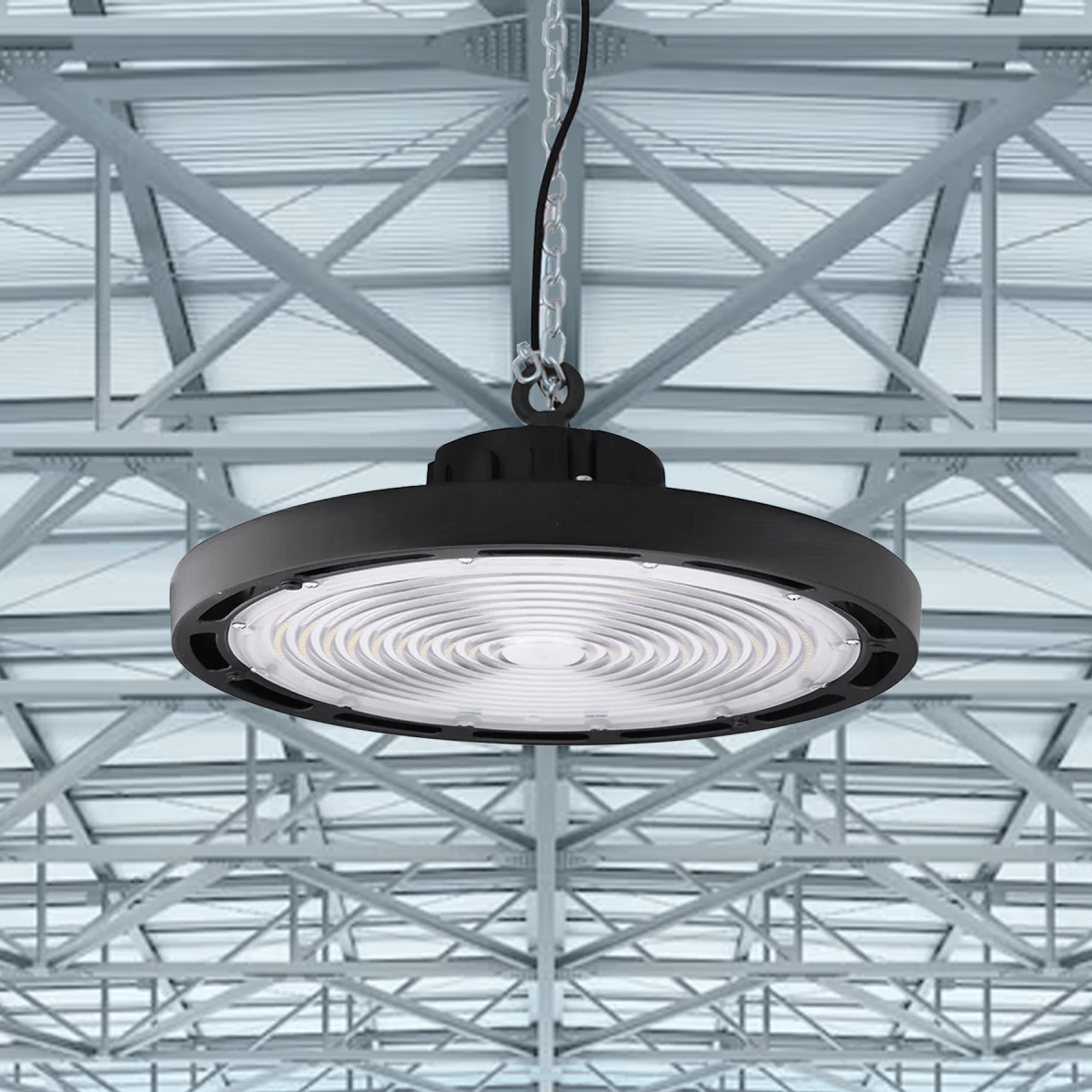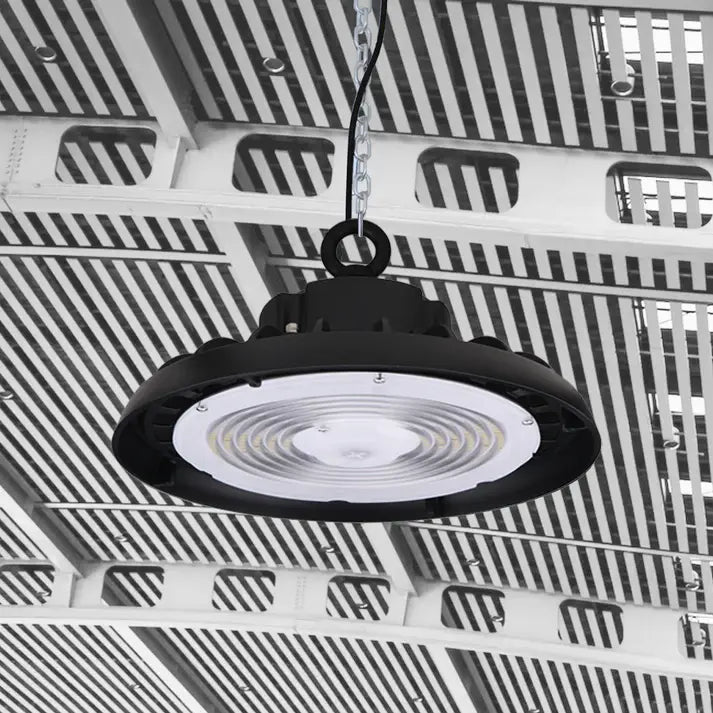


Even when there is an abundance of light in a workshop, the place could be difficult to work at. The one bench appears to be bright while the other is in shade. Often, the problem is not the fixture. It is the spacing.
UFO High Bay Lights work best when mounting height, beam spread, room size, and work supports the layout. No single distance fits every shop, but checks can get you close before installation.
Why Spacing Matters in a Workshop
 Workshops are not like open storage places. People move around machines, stand on benches, inspect parts, look at marks, and work with tools. Bad location of fixtures will cause dark spots precisely where you need good visibility.
The arrangement also influences comfort. Fixtures arranged far apart will cause spaces between light beams. If they're too close together, the middle will be too bright because you're using extra fixtures.
How Far Apart Should UFO High Bay Lights Be?
 A useful starting point is to relate fixture spacing to mounting height. For many workshop layouts, installers begin around one to one and a half times the mounting height, then adjust for the fixture and the work being done.
For example:
-
At a 12-foot mounting height, start around 12 to 18 feet apart.
-
At 15 feet, start around 15 to 22 feet apart.
-
At 20 feet, spacing may begin around 20 to 30 feet apart.
However, these figures are merely guidelines; it is possible that a wider beam will light a larger floor area than a narrow beam. High-output fixtures can also change the result.
For detailed bench work, fabrication, repairs, or inspection, staying toward the closer end can help keep lighting more even.
Start With Mounting Height, Not Wattage
 While shopping by watts is easier, height above the work surface should be determined first.
The lighting fixture installed 12 feet above the work surface does not act in the same manner at 20 feet above the work surface. The farther up it is from the work surface, the wider its light beam is spread.
That is why LED High Bay Lights should be chosen as part of a layout, not as isolated products.
Measure from the floor to the planned fixture position. Beams, ductwork, hooks, chains, and mounting hardware can lower the actual fixture.
Beam Angle Can Change the Layout
 Wider beam spread allows light to cover a larger portion of the workshop. This is applicable at reasonable mounting heights and open-plan floors. A narrow beam allows light to be directed downwards, and this can be useful in higher ceilings.
UFO LED High Bay Lights are common for wide lighting coverage, but the beam spread pattern will depend on the particular type.
Do Machines and Shelves Affect Spacing?
 Tall shelving can block light. Vehicle lifts can create shadows. Large machines may stop light from reaching the floor behind them. Even an overhead door or storage rack can affect fixture placement.
Pay extra attention to:
-
Main workbenches
-
Cutting or assembly stations
-
Tool walls
-
Vehicle service areas
-
Inspection points
-
Walkways between equipment
The best High Bay Lighting plan follows the work, not just the ceiling grid.
Should Every Fixture Be Spaced the Same?
 Equal spacing looks clean on a drawing, but workshop needs are not equal. A storage corner may need less light than a repair bench. A central machine area may need better coverage than a rarely used wall.
You can keep the main layout consistent and tighten spacing where more light is useful. Another option is to add task lighting at benches instead of adding more ceiling fixtures across the room.
LEDMyPlace Buyer’s Guide: What to Check Before You Buy
 Before purchasing High Bay LED Lights for your workshop, first consider the room, not the product listing.
Note the ceiling height, room length, room width, and critical work areas. You can then make decisions based on lumen output, wattage, beam angle, dimmability, and type of mount.
Adjustable UFO high bay LED lights are available from LEDMyPlace for workshops as well as commercial applications. That flexibility can help when one shop has different lighting needs across its floor.
Also check the fixture rating for the environment. Workshops can have dust, moisture, heat, or changing conditions. Choose a fixture that matches the space where it will operate.
How Many Fixtures Does Your Workshop Need?
 Start by measuring the total floor area. Then decide which areas need general lighting and which need stronger task coverage.
A simple row layout works well in many rectangular workshops. Keep fixtures far enough from walls for the beam to spread while still giving the perimeter useful light.
In case of irregular spaces, break up the floor into smaller areas and design them according to their working area.
In case of a large shop space, high ceilings, or machinery, go for photometric design. It can show expected light levels before installation and reduce guesswork.
Common High Bay Spacing Mistakes
One typical error would be copying a floor plan from other buildings. Even workshops with the same area may need different spacing as a result of ceiling height, productivity, and fixture placement.
Others focus only on the wattage and forget about wall coverage and make no allowance for future floor plan adjustments.
Conclusion
Each workshop requires its own exact distance, although beginning at a distance of one to one-and-a-half times the mounting height will give you a good start. However, it should also take into account the beam angle, lumens emitted by the fixtures and other factors.
The UFO High Bay Lights are designed to deliver excellent workshop lighting if the spacing is calculated before installation. You need to measure the area, plan the work zones, analyze the fixtures' specs, and not buy based on wattage only.
For people seeking flexibility and commercial workshop lighting options, LEDMyPlace can offer you high bays that will fit any height and setup.
Frequently Asked Questions
Q. How far apart should UFO high bay lights be in a workshop?
A: A good starting point is about 1 to 1.5 times the mounting height. Final spacing should also depend on beam angle, lumen output, and the type of work done below.
Q. How many UFO high bay lights do I need for my workshop?
A: It depends on the workshop size, ceiling height, fixture output, and work zones. Measure the floor area first, then plan the layout around benches, machines, and other key spaces.
Q. What mounting height works best for UFO LED high bay lights?
A: UFO LED high bay lights are commonly used in workshops with higher ceilings, but the right fixture depends on its lumen output and beam pattern. Always match the light to the actual mounting height.
Q. Can I space high bay lights farther apart with a wider beam angle?
A: In many cases, yes. A wider beam spreads light across more floor area, but spacing too far apart can still create darker spots between fixtures.
Q. Should workshop high bay lights be placed directly over workbenches?
A: Not always, but workbenches and machine areas need enough light for safe, detailed tasks. Adjust the main high bay layout or add task lighting where extra visibility is needed.