

It seems that purchasing a 4-ft tube light should be an easy process. But when you begin to compare products, you will see differences in lumens, watts, color temperature, type of wiring, ballast included, dimming possibilities. Two seemingly identical tubes can behave quite differently after installation.
Choosing LED Tube Lights takes more than checking the price. The tube must fit into the fitting, match the room, and provide adequate lighting. The garage, office, and warehouse cannot have the same requirements.
Look at Lumens Before Wattage
 Wattage indicates the amount of energy used by the bulb but not how bright the room will appear.
For that, check lumens.
In the case of 4-foot LED tube lights, there could be a type that emits more light but requires the same or slightly lower amount of energy.
An excess of lumens is not always positive. An abundance of light coupled with a low ceiling height will cause discomfort. The lumens output needs to fit the surroundings and activities performed.
Check the Wiring Type Before Ordering
 This is one of the easiest details to miss.
Some 4ft LED tubes are made to work with an existing fluorescent ballast. Others are designed for ballast bypass or direct wire installation.
Ballast Compatible Tubes
A ballast compatible tube can often go into an existing fluorescent fixture without removing the ballast. That may save time during a simple retrofit.
Do not assume every ballast will work. Check the approved ballast list. An older ballast can still fail later.
Ballast Bypass and Direct Wire Tubes
With ballast bypass tubes, the ballast is taken out of the circuit. Power goes directly to the lamp holders.
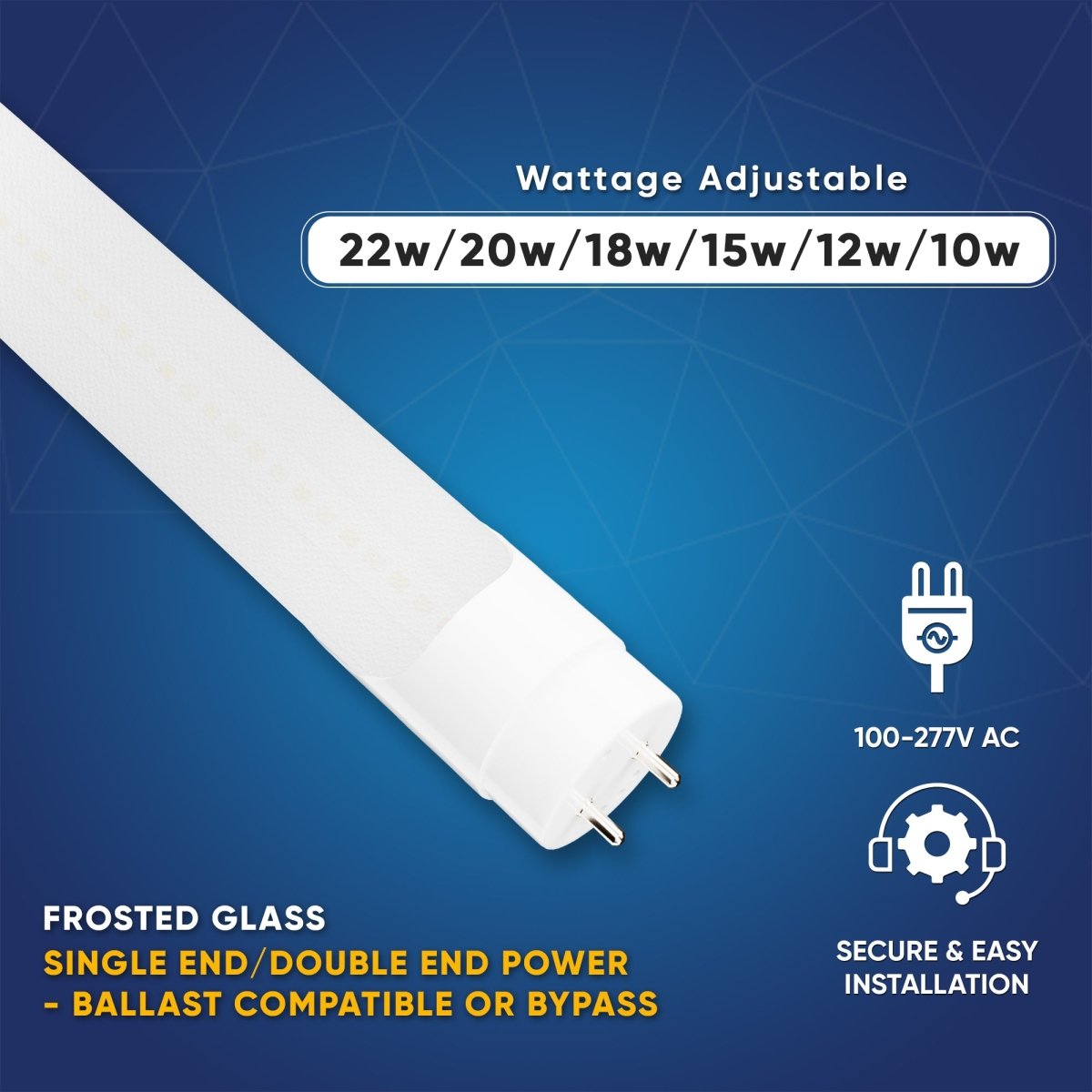
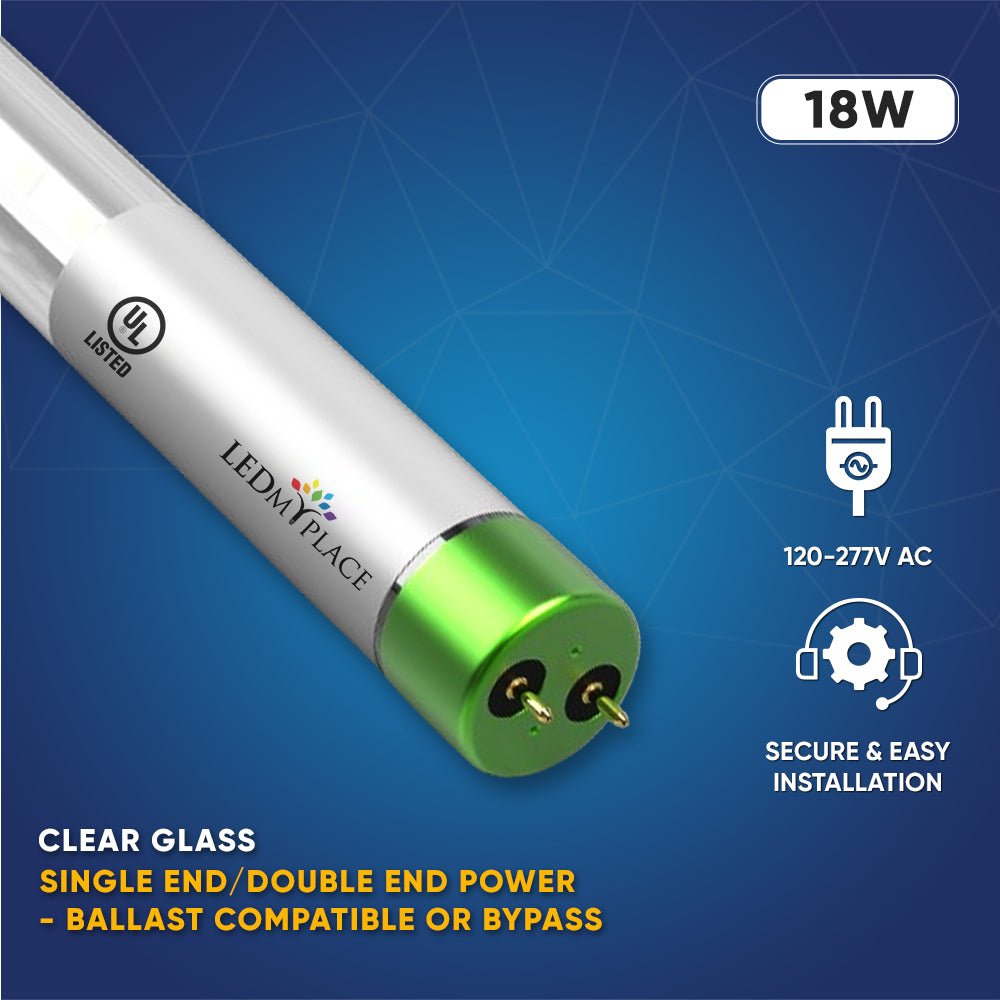
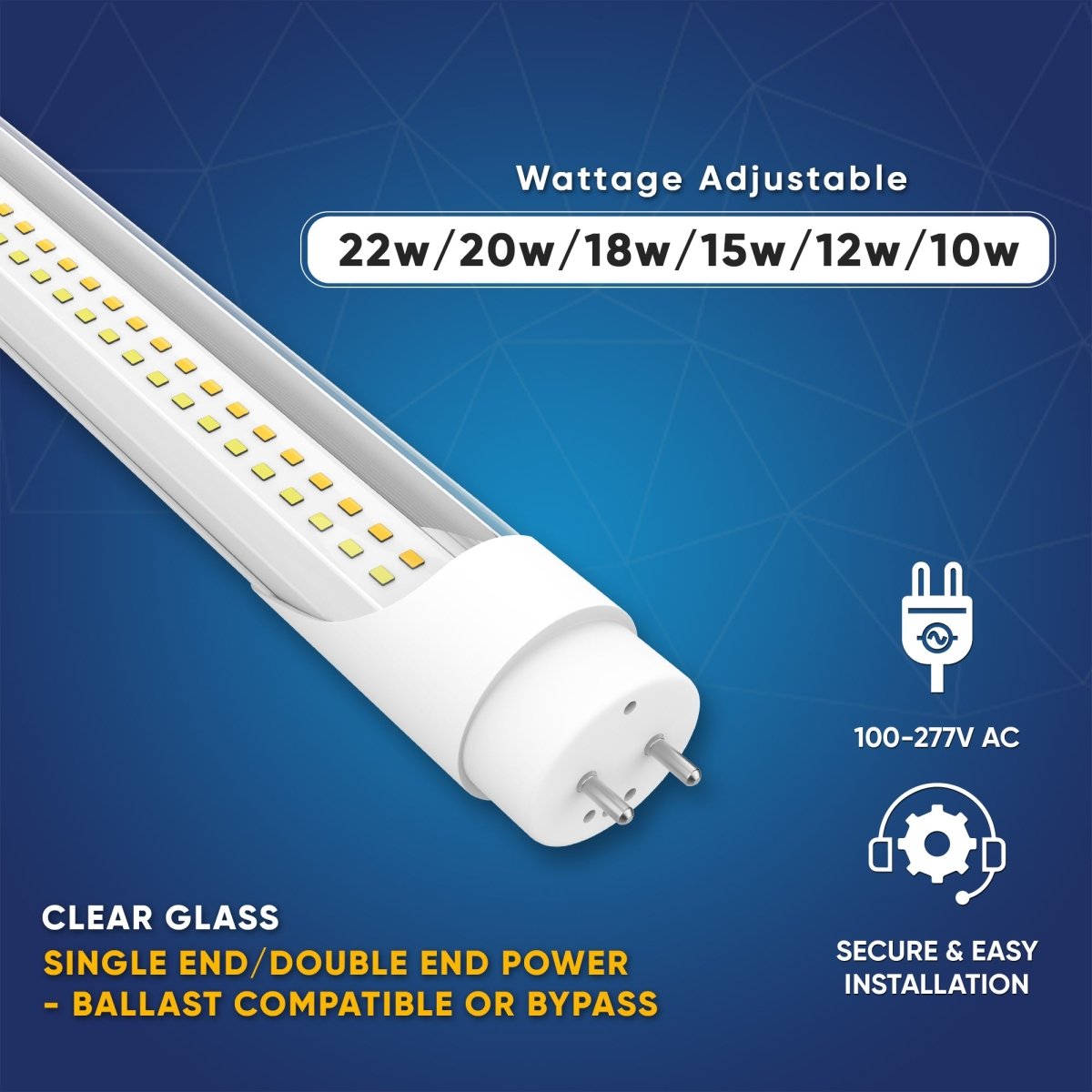
This removes one future maintenance point, but wiring matters. The direct wire lamps can be operated using either single-ended or double-ended electrical power; thus, the fitting should complement the bulb.
If the wiring is unclear, seek an electrician’s assistance.
Pick a CCT That Fits the Space
 Color temperature, or CCT, affects how the light looks in the room.
A lower number feels warmer. A higher number looks cooler and whiter.
Common choices include:
-
3000K for a warmer look
-
4000K for a clean, balanced light
-
5000K for a cooler work-light feel
Garage lighting uses 4000K and 5000K frequently, as they offer better visibility of the tools, shelving, and work areas.
The office setting and many other commercial lighting applications find 3500K and 4000K to be more comfortable.
Do not choose CCT by the highest number. Choose one that fits the room.
Do Not Skip CRI
 CRI tells you how colors look under the light.
CRI of 80 or more is good enough for most interior applications. A higher CRI could be helpful for painting, merchandising, examining, and other applications where color is important.
It is a minor issue that might affect the feeling of the room. It might happen that a bright light would not render the colors right.
When you compare LED tube lights, check CRI along with lumens and CCT instead of treating brightness as the only concern.
Think About Dimming and Controls
 Not every LED tube works with a dimmer.
If you need dimmable LED tubes, check the product details before buying. The tube, dimmer, driver, and wiring setup have to be compatible.
Dimming can be useful in offices, classrooms, meeting rooms, retail areas, and spaces where full output is not needed all day.
Controls can cut wasted energy too. Sensors, timers, and daylight controls may help in warehouses or storage areas that sit empty for part of the day.
LEDMyPlace Buyer's Guide: Match the Tube to the Room
 There isn't one universal tube that will serve all purposes. Begin with the room and work backward.
A garage will require considerations like ceiling height, lighting on benches, shading, and level of detail required.
In warehouses, consider lumens produced, operating hours, fixture height, and maintenance.
Comfort is more important in offices. CCT, glare, CRI, and dimming can affect how the space feels after several hours.
Before choosing commercial LED tube lights from LEDMyPlace, check:
-
Tube length and base
-
Lumen output
-
Wattage
-
CCT
-
CRI
-
Voltage
-
Ballast compatible or ballast bypass design
-
Single-ended or double-ended power
-
Dimming support
-
Rated LED lifespan
That short list can save you from ordering a tube that looks right online but does not work with your fixture.
Tube Replacement or New Fixture?
 Sometimes an LED fluorescent tube replacement is all you need.
Provided that the housing, sockets, and the wiring are in good condition, changing only the lamp might be a quicker and economical option.
A complete fixture is a better choice if the housing or sockets are damaged or the area is undergoing remodeling.
New 4ft LED tube fixtures can also make a larger project easier because the housing and electrical parts are already designed to work together.
The cheaper option on day one may cost more later. Compare energy use, maintenance, replacement access, and operating time.
Check Lifespan, but Read the Details
 A long LED lifespan sounds good, especially in commercial spaces where changing lamps can take time.
Still, do not shop by lifespan alone.
Check the warranty, operating temperature, fixture type, and location. A tube in a hot or enclosed fixture faces different conditions from one in an open office ceiling.
For warehouses and garages, this is worth checking before installation.
Conclusion
Selecting among 4 foot LED lights is made easy if you stop considering products by wattage alone.
Consider lumens, CCT, CRI, wiring, dimming, voltage, and lifetime. Consider the location of the light and the frequency of use after that.
In terms of retrofit, know your mind regarding whether to go for ballast-compatible tubes or the direct wire option. This will affect the installation process and the maintenance phase.
The company LEDMyPlace provides LED Tube Lights, which are useful in garages, office spaces, retail spaces, and warehouses. Specifications of the tube should be considered to avoid wrong combinations.
Frequently Asked Questions
Q. What should I check before buying 4ft LED tube lights?
A: Check lumens, wattage, CCT, CRI, wiring type, voltage, and ballast compatibility. These details help you avoid buying a tube that will not suit your fixture.
Q. Are ballast bypass LED tubes better than ballast-compatible tubes?
A: Ballast bypass tubes remove the ballast from the setup, which can reduce future maintenance. Ballast-compatible tubes may be easier when you want a quicker retrofit.
Q. What color temperature works best for 4 foot LED lights?
A: 4000K works well for many offices and workspaces, while 5000K is often preferred for garages and warehouses where brighter-looking light is useful.
Q. Can 4ft LED tubes replace fluorescent tubes directly?
A: Some can, but not all. Check whether the tube is plug-and-play, ballast bypass, or direct wire before installing it in an existing fluorescent fixture.
Q. How do I choose the right brightness for commercial LED tube lights?
A: Start with lumen output instead of wattage alone. Match the brightness to the ceiling height, room size, and type of work being done.